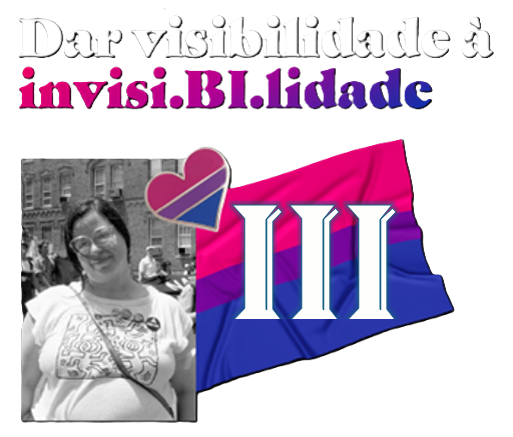
The 3rd edition of exhibition “Giving Visibility to Invisi.BI.lity” is a partnership between ILGA Portugal (CDOC and GRIT), Bialogar and Bi Mosaic, being a continuation of the exhibition started in 2024 by ILGA Portugal (CDOC) in Lisbon..
It’s purpose is to honor the people who created Bisexual Visibility Day and the Bi Flag, the mother of Pride (a bisexual activist who organized the first LGBT March in 1970, a year after Stonewall), the 1990 Bisexual Manifesto (in which, even then, bisexual activists reminded us that there are not just two genders and that bisexuality can encompass everyone), as well as other historical figures, celebrities, and all bisexual+ people in general (Bis, Pans, Omnis, and other Bi+ identities).
The exhibition consists of 14 panels with informative text:
- 5 panels related with Bi+ Visibility;
- 2 panels on the origins of the Exhibition and previous editions;
- 4 panels about CDOC, GRIT and Bialogar;
- 2 panels on Bi+ identities;
- 1 panel about other identities featured in the exhibition photos.
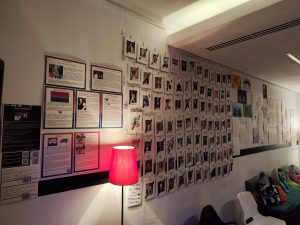
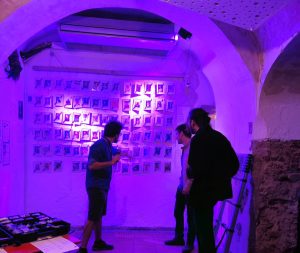
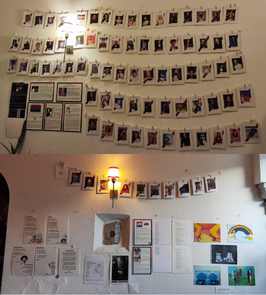
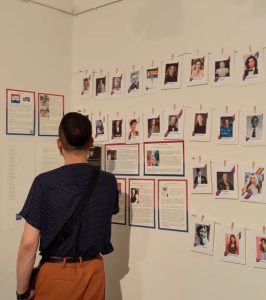
These panels are complemented by 210 photos of Bi+ people – Bis, Pans and Omnis – (21 of which are from Bialogar’s open call, the rest being celebrities and historical figures), as well as texts and poems provided by Bi Mosaic and works of art submitted through Bialogar’s open call.
We thank everyone who participated in the call and all the entities who contributed to bring this exhibition to all the spaces.
Tutorial for starting Bisexual Celebration Day

What do we talk about when we talk about Visibility?
Have the Bisexual people who created Bisexual Visibility Day become visible? Do we know who they are? Let’s start with these names then: Wendy Curry, Michael Page, and Gigi Raven Wilbur.
Three USA Bisexual rights activists who, in 1999, in the middle of an annual conference on Bisexuality, were talking to each other. Wendy Curry (in Our Fence with Wendy Curry By Br. Michael C. Oboza (ret.)) tells us this story, and says that, in the middle of the conversation, Gigi Wilbur proposes throwing a party. When? September. As it’s the birthday month of Freddie Mercury, a Bisexual whom they loved. What day? A weekend, so more people can come.
It turns out that Gigi Wilbur’s birthday is September 23rd, and it fell near the weekend. And so, Bisexual Celebration Day was chosen, which we now also call Bisexual Visibility Day.
Therefore, the factors involved were: social interaction and a support network with which we can talk, vent, and exchange ideas (in this case, three friends, fed up with invisibility and exclusionary policies, decided to simply celebrate and get involved); someone visible who inspires us (in this case, they were at a conference on Bisexuality, conducive to new ideas about visibility, and Freddie Mercury’s visibility also served as inspiration for the chosen month); a network of contacts/associations (Wendy, Michael, and Gigi were already activists in organizations like BiNet USA); and actually getting involved, in order to find spaces and people to hold the celebration.
May bisexual people in Portugal be inspired by Wendy Curry, Michael Page, and Gigi Raven Wilbur to also celebrate themselves, become visible, and organize events throughout this country!
September 23: From Celebration to Visibility

There are several names for September 23rd, including the first version, “Bisexual Celebration Day,” “Bisexual Pride Day,” and the currently most widely used, “Bisexual Visibility Day.”
The change from “Celebration” to “Bisexual Visibility” was coined by UK activist Jen Yockney.
It all began in 2001, with the creation of her website, “bivisibilityday.com,” which aimed to compile and promote Bisexual celebration and visibility events held annually in the UK. But exploring her blog, we realized that it was in 2009, in a post dated September 28th of that year, that the internet began to effectively adopt the name “Bi Visibility Day,” eventually spreading throughout Europe and the rest of the world.
In Portugal, the first year in which there is a visible record of the celebration of Bisexual Visibility Day, found on the LGBTI+ news portal “dezenove”, is in 2011, marked with an awareness video about biphobia, from the ex aequo network, which also organized a party at the LGBTI+ Center, at the time, in São Lázaro.
Bisexual Flag
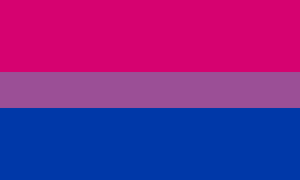
The Bisexual Flag was created by activist Michael Page in 1998 with the purpose of bringing visibility to Bisexual people, both within and outside the LGBT+ community.
Page tells us in his article “History of The Pride Flag” on the former website “biflag.com” that the flag’s colors came from the already existing Bisexual symbol of inverted triangles.
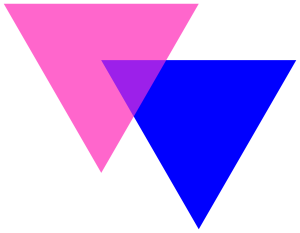
The color pink represents same-gender attraction (Gay, Lesbian), the color blue represents opposite-gender attraction (Straight), and the overlapping purple represents multi-gender attraction (Bi).
For Michael, the key to understanding the symbolism of the Bi Flag is knowing that the purple pixels blend seamlessly with the pink and blue, just as the Bisexual community blends seamlessly with the Gay/Lesbian and Straight communities.
Brenda Howard: "The Mother of Pride"

Did you know that the 1st LGBTI+ Pride March was organized by a Bisexual activist?
Brenda Howard, a Bisexual activist on several fronts—the anti-Vietnam War movement, feminist movements, and LGBT+ movements—is the main figure behind the organization of the 1st Pride March.
This 1st Pride March, called “The Christopher Street Liberation Day March,” was organized by Brenda to commemorate the anniversary of the Stonewall Uprising. The term “Pride” to describe these events was popularized by Brenda Howard, Robert A. Martin, and L. Craig Schoonmaler. Howard also pioneered the organization of a week of events around Pride Day.
Thanks to this milestone, other cities, countries, and continents eventually began to follow suit, culminating in the countless Pride Marches and Parades we see today.
Although Bisexual people have always been linked to the LGBTI+ movement, initially they referred only to the “Gay and Lesbian Movement” and “Marches for Gay and Lesbian Liberation.” Thanks to Brenda Howard and other Bisexual activists, the 1993 Washington Pride March began to include Bisexual people in its name for the first time: “March on Washington for Lesbian, Gay, and Bi Equal Rights and Liberation.”
Brenda Howard was an activist for, among other causes, the Gay Liberation Front, Gay Activists Alliance, BiNet USA, Act Up, Queer Nation, and the New York Area Bisexual Network.
In 2005, the year of her death, the PFLAG organization created the “Brenda Howard Memorial Award,” an annual award that recognizes individuals who have contributed to the visibility of the Bisexual community. This is the first award from a major US LGBTI+ organization to be named after an openly Bisexual person.
Bisexual Manifesto

Anything That Moves: Beyond the Myths of Bisexuality
This Bisexual Manifesto is an excerpt from the introduction to the first issue of Bisexual magazine, “Anything That Moves: Beyond the Myths of Bisexuality.” Sources vary the year of publication between 1990 and 1991. This is a historic statement about what it means to be Bisexual for the people in the Bisexual community who wrote it and for everyone who identifies with those words.
“We are tired of being analyzed, defined and represented by people other than ourselves, or worse yet, not considered at all. We are frustrated by the imposed isolation and invisibility that comes from being told or expected to choose either a homosexual or heterosexual identity.
Monosexuality is a heterosexist dictate used to oppress homosexuals and to negate the validity of bisexuality.
Bisexuality is a whole, fluid identity. Do not assume that bisexuality is binary or duogamous in nature: that we have “two” sides or that we must be involved simultaneously with both genders to be fulfilled human beings. In fact, don’t assume that there are only two genders. Do not mistake our fluidity for confusion, irresponsibility, or an inability to commit. Do not equate promiscuity, infidelity, or unsafe sexual behavior with bisexuality. Those are human traits that cross all sexual orientations. Nothing should be assumed about anyone’s sexuality, including your own.
We are angered by those who refuse to accept our existence; our issues; our contributions; our alliances; our voice. It is time for the bisexual voice to be heard.”
Previous editions of the Exhibition
The exhibition “Giving Visibility to Invisibility” was inaugurated, in its first edition, in September 2024, at the Lisbon LGBTI+ Center of ILGA Portugal, as part of the events of the 2024 Bisexual Visibility Week.
It began as an initiative of CDOC, which aimed to honor Bisexual personalities and historical figures, and to combat the invisibility suffered by Bi+ people. It consisted of the first 5 informative panels, which are included in this exhibition, as well as approximately 32 photographs of personalities and historical figures.
In 2025, in the 2nd edition, the partnership with Bialogar began, and the exhibition began to include art (received through Bialogar’s Open Call and also in partnership with Bi Mosaic) and the photographic section increased to 83 photographs, with the novelty that 10 were of BI+ people who submitted their own photo through Bialogar’s Open Call.
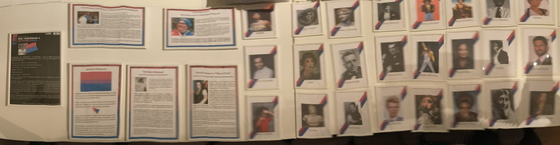
It was also the first time the exhibition left Lisbon, reaching various locations across Portugal, as part of the 1st edition of Bi Fest. Below, you can see photos of the exhibition in 2025 at the various locations.
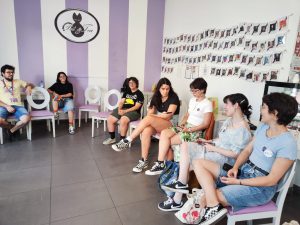
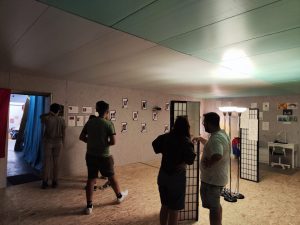
Centro de Documentação Gonçalo Diniz
Created when the Lisbon LGBTI+ Community Center was inaugurated in 1997, the Gonçalo Diniz Documentation Center (CDOC) has the mission of preserving and making available, to different audiences, a vast collection of materials about the history and rights of LGBTQIA+ people.
Currently, the collection includes monographs, periodicals, audiovisual and multimedia documentation, posters, postcards and brochures, among other materials.
The CDOC team also seeks to actively contribute to the organization of cultural and community activities and programming of the ILGA Portugal Association, always striving for greater visibility.
It was in this context that the exhibition “Giving Visibility to Invisibility” emerged, as part of the 2024 Bisexual Visibility Week program, organized by CDOC.
The team also fosters various partnerships, with whom it promotes events inside and outside the LGBTI+ Center, such as Book Fairs, book launches and presentations, book clubs, conversations around archives, libraries and LGBTQIA+ personalities, and many other topics.
It was in this context that in 2025 we joined Bi Fest, in partnership with Bialogar, which led to the expansion of the present exhibition as we see it today.
The CDOC collection has been built up over the years through donations, incorporations and own acquisitions and is owned by the ILGA Portugal Association, based in Lisbon.
If you have materials that you consider suitable to be included in our collection (physical or digital), you can contact us via email at cdoc@ilga-portugal.pt .
GRIT - Grupo de Reflexão e Intervenção Trans
GRIT – Grupo de Reflexão e Intervenção Trans (Trans Reflection and Intervention Group) is a community group of the ILGA Portugal Association, which fights for the legal, clinical and social rights of the Trans, Non-binary and gender diverse population.
Formally created in April 2006, GRIT’s areas of activity are political and social intervention, through the organization of debates, training, workshops and conversations, as well as the promotion of activities regarding awareness and social interaction, and also the promotion of actions on days of visibility and remembrance.
GRIT also facilitates support and sharing groups for Trans, Non-binary and questioning individuals, including eglish-speaking sessions.
At Bi Fest, GRIT aims to highlight the visibility of Trans people within the Bi, Pan, and Omni identities.
You can know more about GRIT at: grit.ilga-portugal.pt
Bialogar

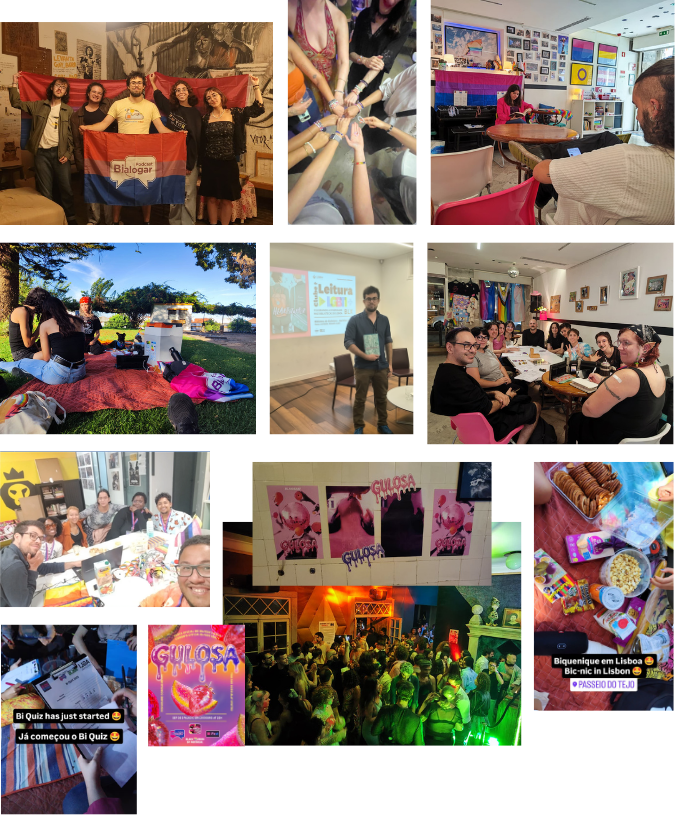
Bialogar is a Bi+ Visibility collective and podcast created by Alexandre and Sofia in 2024, with the aim of contributing to Bissexual+ Visibility in Portugal. Between November/2025 and March/2026, Bruna, Diego, João, Naomi and Sky joined the team.
You can chek our photos on the exhibion (Open Call Photos) and know more about us at: bialogar.pt/en/about-us-en/
Besides the podcast, we organize events like Bi Fest, and in 2025 we’ve organized QueerNatal.
How it all started:
The idea for the podcast emerged around April/May 2024, but it only materialized on October 11, 2024 (Coming Out Day), when the first episode was released.
The name arose from a conversation between Alexandre, Sofia and a mutual friend at the Lisbon LGBTI+ Center, where they were discussing possible names, eventually arriving at the word “Biálogo” (a pun with “Bi” and the Portuguese word “diálogo” – meaning dialogue) and then “Bialogar,” making the name a pun on words with “Bi” (from Bisexual) and “Dialogar” (to dialogue, in Portuguese).
Check our website and social at: bialogar.pt/en/
The 1st edition of Bi Fest
In 2025, we created Bi Fest (inspired by initiatives such as “Abrilés” and the “Bisexual Visibility Week” organized by CDOC in 2024), with the aim of being an agenda for Bi+ Visibility events in Portugal, where various entities collaborate on bringing events to different parts of the country.
You can know more about Bi Fest 2025 at: bi-fest.bialogar.pt/en/2025-en/
BI+ / Bisexual+ Identities
Bi+ (or Bisexual+) is an umbrella term used to refer to the set of identities in which attraction (sexual and/or romantic) is towards more than one gender. The term originates from the fact that the word Bisexuality means attraction to more than one gender, being used as a comprehensive term.
It is important to emphasize that each person’s identity is valid (as long as it does not jeopardize other identities) and should be respected, as well as that each person has the autonomy to identify or even choose not to have any label.
Below, we present 3 of the most common identities within the Bi+ spectrum:
Bisexual
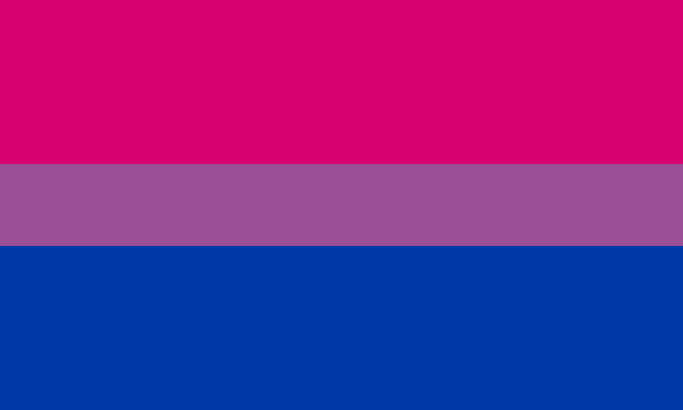
Bisexuality is attraction to more than one gender, which may include all genders, only some of them or even being just binary. Gender, sexual characteristics or gender expression may or may not influence how a person is attracted to others. In the case of purely romantic attraction, we speak of biromanticism.
Pansexual

Pansexuality is attraction to any gender, where gender, sexual characteristics or gender expression do not influence how a person is attracted to others. In the case of purely romantic attraction, we speak of Panromanticism.
Omnisexual

Omnisexuality is attraction to any gender, where gender, sexual characteristics or gender expression influence how a person is attracted to others. In the case of purely romantic attraction, we speak of Omniromanticism.
Other Identities featured in the Exhibition
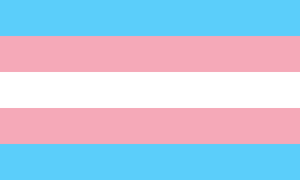
Trans
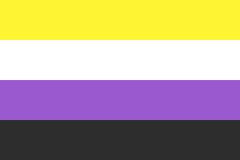
Non-binary
Genderfluid
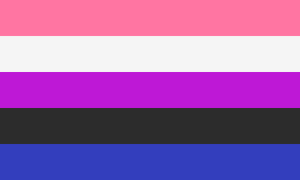
Agender
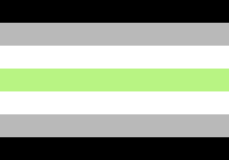
Asexual
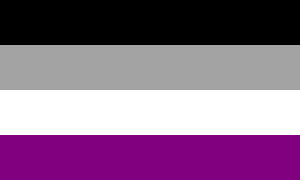
Demisexual
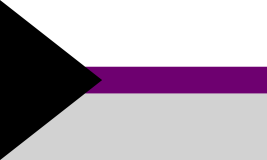
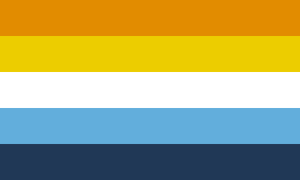
Aroace
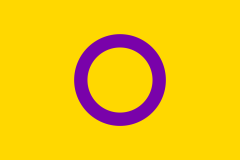
Intersex
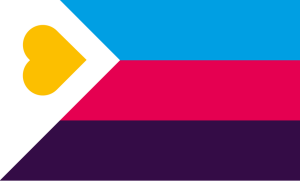
Poliamory
Disability Pride