What do we talk about when we talk about Visibility?
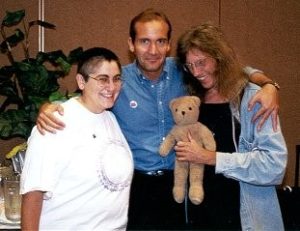
Have the Bisexual people who created Bisexual Visibility Day become visible? Do we know who they are? Let’s start with these names then: Wendy Curry, Michael Page, and Gigi Raven Wilbur.
Three USA Bisexual rights activists who, in 1999, in the middle of an annual conference on Bisexuality, were talking to each other. Wendy Curry (in Our Fence with Wendy Curry By Br. Michael C. Oboza (ret.)) tells us this story, and says that, in the middle of the conversation, Gigi Wilbur proposes throwing a party. When? September. As it’s the birthday month of Freddie Mercury, a Bisexual whom they loved. What day? A weekend, so more people can come.
It turns out that Gigi Wilbur’s birthday is September 23rd, and it fell near the weekend. And so, Bisexual Celebration Day was chosen, which we now also call Bisexual Visibility Day.
Therefore, the factors involved were: social interaction and a support network with which we can talk, vent, and exchange ideas (in this case, three friends, fed up with invisibility and exclusionary policies, decided to simply celebrate and get involved); someone visible who inspires us (in this case, they were at a conference on Bisexuality, conducive to new ideas about visibility, and Freddie Mercury’s visibility also served as inspiration for the chosen month); a network of contacts/associations (Wendy, Michael, and Gigi were already activists in organizations like BiNet USA); and actually getting involved, in order to find spaces and people to hold the celebration.
May bisexual people in Portugal be inspired by Wendy Curry, Michael Page, and Gigi Raven Wilbur to also celebrate themselves, become visible, and organize events throughout this country!
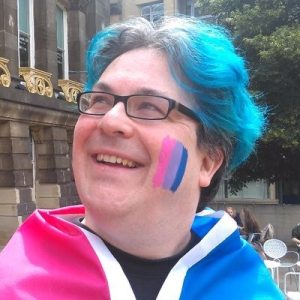
There are several names for September 23rd, including the first version, “Bisexual Celebration Day,” “Bisexual Pride Day,” and the currently most widely used, “Bisexual Visibility Day.”
The change from “Celebration” to “Bisexual Visibility” was coined by UK activist Jen Yockney.
It all began in 2001, with the creation of her website, “bivisibilityday.com,” which aimed to compile and promote Bisexual celebration and visibility events held annually in the UK. But exploring her blog, we realized that it was in 2009, in a post dated September 28th of that year, that the internet began to effectively adopt the name “Bi Visibility Day,” eventually spreading throughout Europe and the rest of the world.
In Portugal, the first year in which there is a visible record of the celebration of Bisexual Visibility Day, found on the LGBTI+ news portal “dezenove”, is in 2011, marked with an awareness video about biphobia, from the ex aequo network, which also organized a party at the LGBTI+ Center, at the time, in São Lázaro.
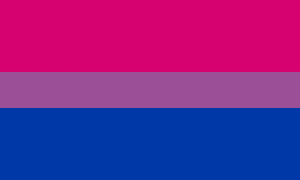
The Bisexual Flag was created by activist Michael Page in 1998 with the purpose of bringing visibility to Bisexual people, both within and outside the LGBT+ community.
Page tells us in his article “History of The Pride Flag” on the former website “biflag.com” that the flag’s colors came from the already existing Bisexual symbol of inverted triangles.
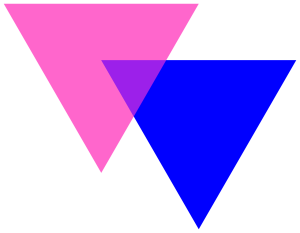
The color pink represents same-gender attraction (Gay, Lesbian), the color blue represents opposite-gender attraction (Straight), and the overlapping purple represents multi-gender attraction (Bi).
For Michael, the key to understanding the symbolism of the Bi Flag is knowing that the purple pixels blend seamlessly with the pink and blue, just as the Bisexual community blends seamlessly with the Gay/Lesbian and Straight communities.
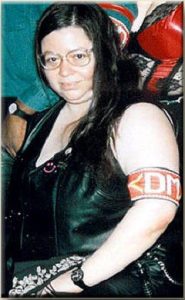
Did you know that the 1st LGBTI+ Pride March was organized by a Bisexual activist?
Brenda Howard, a Bisexual activist on several fronts—the anti-Vietnam War movement, feminist movements, and LGBT+ movements—is the main figure behind the organization of the 1st Pride March.
This 1st Pride March, called “The Christopher Street Liberation Day March,” was organized by Brenda to commemorate the anniversary of the Stonewall Uprising. The term “Pride” to describe these events was popularized by Brenda Howard, Robert A. Martin, and L. Craig Schoonmaler. Howard also pioneered the organization of a week of events around Pride Day.
Thanks to this milestone, other cities, countries, and continents eventually began to follow suit, culminating in the countless Pride Marches and Parades we see today.
Although Bisexual people have always been linked to the LGBTI+ movement, initially they referred only to the “Gay and Lesbian Movement” and “Marches for Gay and Lesbian Liberation.” Thanks to Brenda Howard and other Bisexual activists, the 1993 Washington Pride March began to include Bisexual people in its name for the first time: “March on Washington for Lesbian, Gay, and Bi Equal Rights and Liberation.”
Brenda Howard was an activist for, among other causes, the Gay Liberation Front, Gay Activists Alliance, BiNet USA, Act Up, Queer Nation, and the New York Area Bisexual Network.
In 2005, the year of her death, the PFLAG organization created the “Brenda Howard Memorial Award,” an annual award that recognizes individuals who have contributed to the visibility of the Bisexual community. This is the first award from a major US LGBTI+ organization to be named after an openly Bisexual person.
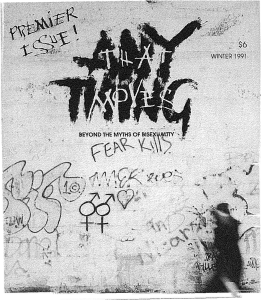
Anything That Moves: Beyond the Myths of Bisexuality
This Bisexual Manifesto is an excerpt from the introduction to the first issue of Bisexual magazine, “Anything That Moves: Beyond the Myths of Bisexuality.” Sources vary the year of publication between 1990 and 1991. This is a historic statement about what it means to be Bisexual for the people in the Bisexual community who wrote it and for everyone who identifies with those words.
“We are tired of being analyzed, defined and represented by people other than ourselves, or worse yet, not considered at all. We are frustrated by the imposed isolation and invisibility that comes from being told or expected to choose either a homosexual or heterosexual identity.
Monosexuality is a heterosexist dictate used to oppress homosexuals and to negate the validity of bisexuality.
Bisexuality is a whole, fluid identity. Do not assume that bisexuality is binary or duogamous in nature: that we have “two” sides or that we must be involved simultaneously with both genders to be fulfilled human beings. In fact, don’t assume that there are only two genders. Do not mistake our fluidity for confusion, irresponsibility, or an inability to commit. Do not equate promiscuity, infidelity, or unsafe sexual behavior with bisexuality. Those are human traits that cross all sexual orientations. Nothing should be assumed about anyone’s sexuality, including your own.
We are angered by those who refuse to accept our existence; our issues; our contributions; our alliances; our voice. It is time for the bisexual voice to be heard.”
 Bialogar is a Bisexual Visibility podcast created and presented by Alexandre (he/him) and Sofia (she/her), with the goal of contributing to Bisexual visibility in Portugal.
The idea for the podcast arose somewhere arround April/May 2024, but only came out on October 11, 2024 (Coming Out Day), when the first episode was released.
Season 1 ended on July 11 2025, with 10 episodes and a total (as of August 30 2025) of 10,091 listens and a total reach of approximately 113,000 views. Currently, it has 245 subscribers on YouTube, 193 on Spotify, and 1,205 followers on Instagram.
About the Podcast:
We aim to be a meeting point for reflection, sharing, mutual help and support for all people in the Bisexual+ and LGBTQIA+ communities, those questioning, allies, and collectives, when it comes to issues of bisexuality, from an intersectional perspective with the entire LGBTQIA+ community, feminism, and society in general.
We focus on feminist values, equality, equity, respect for people and human rights, and the defense of LGBTQIA+ rights.
You can learn more about the podcast by clicking here!
About who created the podcast
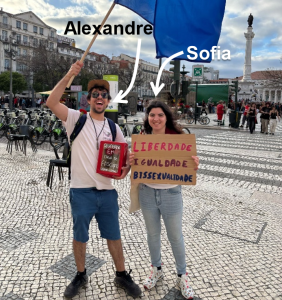
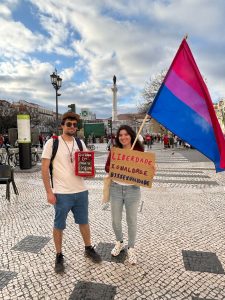
Alexandre and Sofia, Lisbon, 25/April/2025
Alexandre (he/him)
Likes: gardening 🌱, trekking, urbex, photography 📷, anime, food 😋, Lord of the Rings, Hunter x Hunter, Heartstopper, Murder She Wrote, volunteering, LGBTQIA+ history, traveling, going to LGBT+ parties and events.
Sofia (she/her)
Likes: the color red, books 📚, movies 📽️, photography 📷, LGBTQIA+ history, volunteering, doing chats and quizzes about LGBTQIA+ people and characters, research for the Arquivo Sáfico (Sapphic Archive) blog, and going to karaoke parties at the LGBTI+ Center, although she doesn’t sing.
About the Name and Logo:
The name came up in a conversation between Alexandre, Sofia and a mutual friend at the Lisbon LGBTI+ Center, where they were discussing name possibilities, eventually arriving at the word “Biálogo” (a pun with the word “diálogo” – dialogue in Portuguese – and “Bi” for Bissexual) and then “Bialogar,” making the name a pun on the words “Bi” (for Bisexual) and “Dialogar” (the verb “to dialogue” in Portuguese).
The logo came from an idea by the podcast creators, with an initial sketch of two speech bubbles spelling out “Bialogar” and the colors of the Bisexual flag. It was then designed by Francisco Rodrigues (he/him | Queer artist and friend of Alexandre), going through several sketches until arriving at the two versions that were adopted as symbols of Bialogar.
You can learn more about Francisco on Instagram: @francisco_sr.art
Visit us at: en.bialogar.pt